


How Does a Baby’s Visual Memory Develop?
Discover how babies develop visual memory, recognize familiar faces and objects, and how simple everyday activities can support this skill.
How Does a Baby’s Visual Memory Develop?
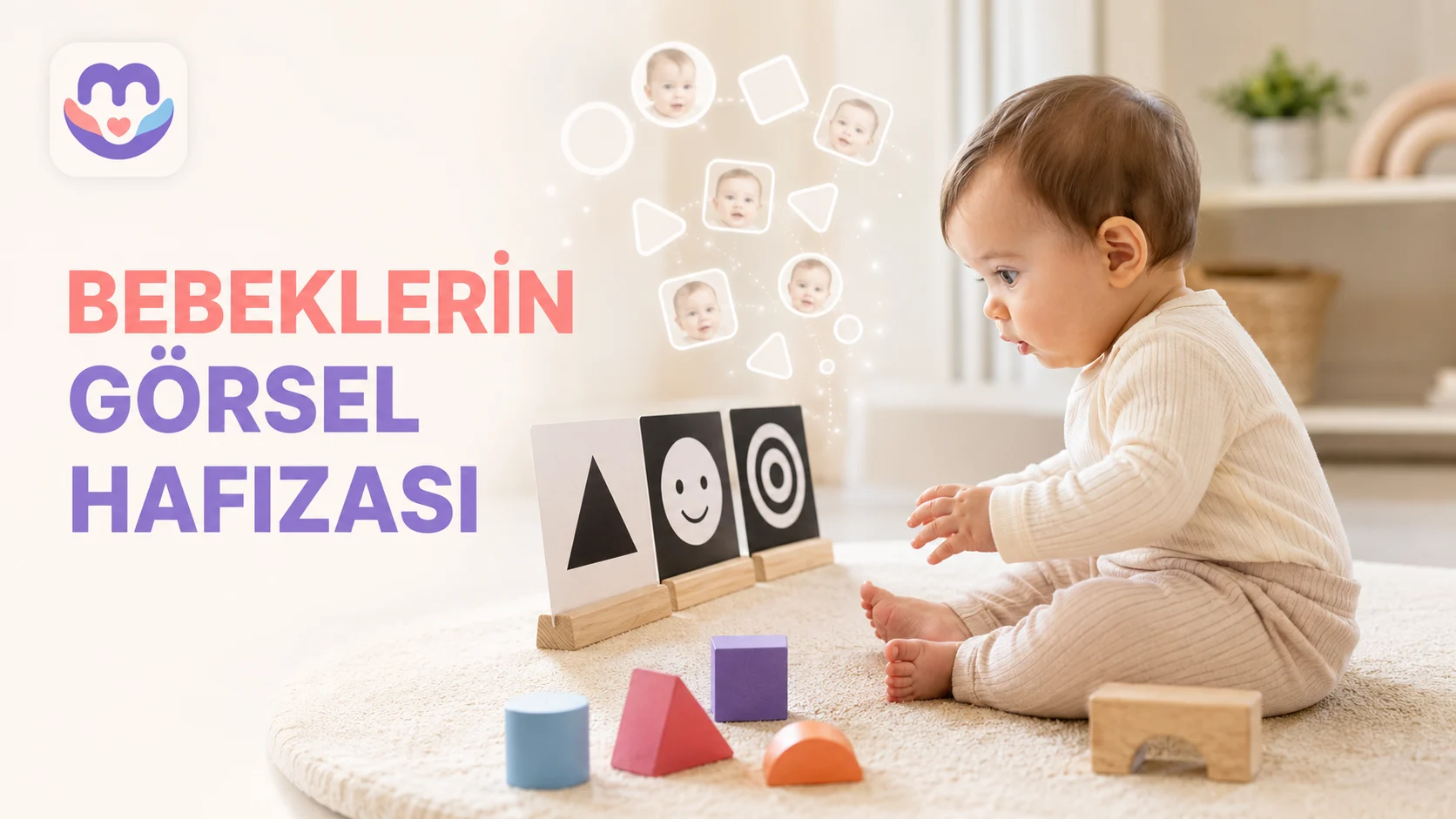
Babies begin learning about the world by observing what is around them. Faces, colors, shapes, toys and everyday objects gradually leave traces in their memory. When a baby reacts to a person or object they have seen before, they may be using their developing visual memory.
Visual memory is the ability to remember and recognize something that has previously been seen. It helps babies recognize family members, become familiar with their surroundings and connect visual cues with everyday routines.
When do babies begin remembering what they see?
Visual memory starts developing from birth. Although a newborn’s vision is still developing, babies may already show interest in nearby faces, clear shapes and high-contrast images.
A caregiver’s face is one of the most frequently seen and important images in a baby’s early life. As babies grow, they may become better at distinguishing familiar faces from unfamiliar ones. They can also begin recognizing frequently used toys, rooms and household objects.
During the early months, visual memories may last for relatively short periods. As development continues, babies can retain familiar images for longer and may respond by smiling, becoming excited, reaching out or looking closely at something they recognize.
Why is visual memory important for babies?
Visual memory involves more than recognizing a face or favorite toy. It also helps babies understand their surroundings and learn from repeated experiences. Familiar images, objects and routines can make everyday life feel more predictable.
For example, a baby may begin to associate seeing a bottle with feeding time, recognize an object used before sleep or become excited when a favorite picture book appears. These are simple examples of how visual memory can become connected with daily routines.
As babies grow, visual memory may also support their ability to distinguish between objects, recognize faces, focus their attention, imitate what they see and learn new information.
How can you notice a baby’s visual memory developing?
Babies cannot explain what they remember, but their expressions, movements and attention can provide clues. Every baby responds differently, but behaviors related to recognition may include:
- Smiling or becoming excited when seeing a familiar face
- Reaching toward a favorite toy
- Looking closely at a picture they have seen before
- Appearing more comfortable in a familiar environment
- Searching for an object that has been partially hidden
- Showing interest in the pages of a frequently read book
These behaviors do not appear at exactly the same time for every baby. Age, attention span, interests and individual development can all influence how a baby responds.
Simple activities that may support visual memory
Supporting visual memory does not require expensive or specialized toys. Short and enjoyable activities during everyday life can help babies build connections with the people and objects they see.
1. Read the same picture book regularly
Repetition can help babies become familiar with images. Reading the same book regularly and pointing to the objects in its pictures may support connections between images and words.
2. Look at family photographs together
Show your baby photographs of family members and say each person’s name. Over time, your baby may begin recognizing familiar faces in photographs as well as in person.
3. Play a simple find-the-toy game
Show your baby a favorite toy and then partially cover it with a light cloth. Searching for the toy with their eyes or hands can help them learn that an object still exists even when it is not fully visible.
4. Name familiar everyday objects
Point to safe household objects and repeat their names at different times. Repeatedly seeing and hearing the name of the same object may help your baby connect the visual image with the word.
5. Use high-contrast images
During the early months, black-and-white pictures or images with strong color differences may be easier for babies to notice. You can show these images briefly from a comfortable and appropriate distance.
6. Keep everyday routines familiar
Familiar objects used during bathing, feeding, playtime or bedtime may help babies understand what is about to happen. These repeated visual cues can support both visual memory and awareness of daily routines.
What should parents keep in mind?
Visual memory activities should not feel like lessons or tests. It is completely normal for a baby to look away, become tired or show no interest in a particular activity.
Keep activities brief, follow your baby’s interest and take a break when they appear tired. The goal is not to make your baby perform a task, but to give them opportunities to explore their surroundings in a safe and enjoyable way.
Every baby develops differently
Attention span, visual interests and memory skills can vary from one baby to another. Some babies may be especially interested in faces, while others may focus more on movement, colors or particular toys.
Instead of comparing your baby with others, it can be more helpful to observe their individual progress over time. Recording small milestones and memorable moments may also make gradual changes easier to notice.
Record your baby’s development with Mammoria
Mammoria – Baby Tracker helps you organize your baby’s sleep, breastfeeding, height, weight, percentile, vaccination, medication and allergy records in one place. You can keep track of important moments as your baby grows and easily review previous records.
Download Mammoria – Baby Tracker on Google Play
Download Mammoria – Baby Tracker on the App Store
Important: This article is intended for general informational purposes only. It does not replace medical advice, diagnosis or a professional developmental assessment. Speak with a healthcare professional if you have concerns about your baby’s vision, attention or development.